This post contains affiliate links, and we may be compensated if you make a purchase after clicking on our links, at no additional cost to you.
🐶 Ever wondered why your majestic Standard Poodle sometimes eats like a vacuum cleaner, then turns their nose up at dinner the next day? You're not alone! Poodle parents everywhere have struggled to crack the code on their dog's unique dietary needs.
🔎 With so much conflicting information online about what and how much to feed your furry friend, it's hard to know where to start. You want the best for your poodle, but wading through endless articles and opinions is overwhelming.
✅ In this guide, we'll provide clear, reliable advice tailored specifically to Standard Poodles. We'll cover everything from portion sizes to key nutrients, so you can feed your poodle with confidence. Let's dive in and discover how much does a Standard Poodle eat!
Table of Contents
How much should a standard poodle eat?
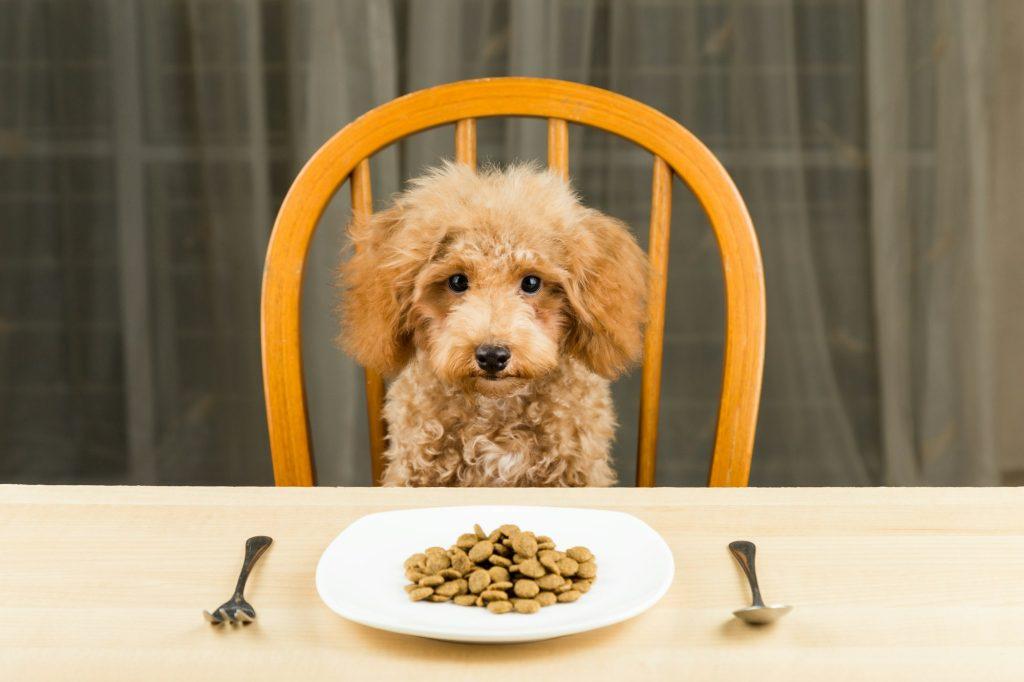
Uninterested Poodle puppy with plate of kibbles on the table
🍽️ "Most Poodles thrive on 1.5-3 cups of high-quality kibble per day, but individual needs vary." - Dr. Sarah Wilson, Happy Paws Veterinary Clinic
This is a starting point, as Poodles, like any breed, have varying metabolisms based on size, activity level, and even genetics. Your poodle's exact needs will depend on their build, age, and lifestyle.
⚖️ Think of feeding guidelines as a general roadmap, not a strict set of rules. Even within the same breed, every dog is unique. Two poodles from the same litter might have vastly different calorie requirements. It's important to tailor your feeding plan to your individual pup.
Beyond the Feeding Chart: Factors That Matter
🦴 One key factor is your poodle's individual metabolism. Some dogs naturally burn calories faster than others. My Poodle, Luna, used to have a sensitive stomach. Switching from one big meal to two smaller ones transformed her energy levels!
💪 If your Standard Poodle is a canine athlete, they'll likely need more fuel than their couch potato counterparts. Performance dogs may require a higher fat and protein diet to support their energy needs, and portion sizes may need to increase during periods of intense training or competition.
⏳ Age is another important consideration. Puppies have different nutritional needs than adults as they grow and develop. They may need to eat more frequently. Seniors, on the other hand, often have slower metabolisms but may actually require more food to maintain muscle mass. Work with your vet to determine appropriate portions and nutrient ratios for each life stage.
🍴 Splitting your poodle's daily ration into two or three smaller meals can make a big difference in their well-being. Here's why:
Poodles are deep-chested dogs, putting them at higher risk for bloat - a serious condition where the stomach twists on itself. Smaller meals reduce bloat risk, a major concern in Poodles.
Feeding smaller portions can help with weight management.
After I made this switch, I noticed Luna seemed more settled throughout the day.
🧠 Don't forget that mental exercise burns calories too! Poodles are highly intelligent and need plenty of enrichment.
Puzzle feeders and nosework games are great boredom busters that also support a healthy weight.
These activities are lifesavers on rainy days when physical exercise is limited.
🤔 The quality of your poodle's food plays a major role in how much they need to eat.
Cheap kibble loaded with fillers may leave your dog feeling unsatisfied, causing them to overeat and pack on excess pounds.
Focus on high-quality, nutrient-dense options with lean proteins, healthy fats, and digestible carbohydrates. Poodles need the right nutrients for that gorgeous coat!
Nutrient comparison of popular poodle foods
Brand
Protein %
Fat %
Fiber %
First Ingredient
Royal Canin Poodle
30
18
3.3
Brewers rice
Purina Pro Plan
27
17
3
Chicken
Hill's Science Diet
21.5
12
2
Chicken Meal
Taste of the Wild
32
18
4
Bison
The Sneaky Side of Snacks: How a Few Bites Add Up
🍎 When it comes to treats and extras, moderation is key.
Many fruits and veggies make excellent low-calorie snacks for poodles. Some favorites include apple slices (without seeds), baby carrots, green beans, and blueberries.
Avoid grapes, onions, and other foods that can be toxic to dogs.
🤏 A little bit of "people food" is fine as an occasional treat, but those calories add up fast!
Did you know a single ounce of cheese is over 10% of the daily calories for a 50 lb Poodle?
I learned this lesson the hard way when Luna started gaining weight after I got a little too generous with table scraps.
👋 Knowing if your poodle is at a healthy weight is important, but it's not always as simple as looking at the number on the scale. The best way to assess your dog's body condition is with your hands and eyes.
Signs of a Healthy Poodle:
Easily felt ribs (but not visible)
Visible waist when viewed from above
Tucked up belly from the side
Bright eyes and shiny coat
Good energy levels
Solid stools
"A body condition score of 4-5 out of 9 is ideal for most Poodles. If you're unsure, ask your vet for a quick lesson!" - Dr. Lisa Hoffman, Pet Wellness Clinic
🌟 Other signs of a healthy, well-nourished poodle include bright eyes, a shiny coat, good energy levels, and solid stools. If you notice any of the following, it may be time to reevaluate your feeding plan or check for underlying health issues with your vet:
Dull coat
Excessive shedding
Lethargy
Digestive issues
Weight loss plan example If your poodle needs to slim down, work with your vet to establish a plan. Here's an example:
Week
Cups per day
Treats per day
Target weight
1
3
2
60
2
2.5
2
59
3
2.5
1
58
4
2
1
57
Not sure if your Poodle is at their ideal weight? Your vet can help! Take this article with you to your next checkup.
Conclusion
🐾 Feeding your Standard Poodle doesn't have to be complicated. Start with a high-quality food and portion it out based on your individual dog's calorie needs. Factor in their age, activity level, and metabolism, and adjust as needed to maintain a healthy weight. Don't forget to account for treats and table scraps!
💬 Every poodle is unique. What works for one may not work for another. You know your Poodle best! These guidelines, a little love, and observation will keep them thriving.
💖 Remember, there's no perfect formula for feeding your poodle. The best approach is a combination of smart nutrition choices, attentive monitoring, and lots of love. With a little effort and education, you can keep your poodle happy, healthy, and well-fed for years to come!
Jelly beans are a popular treat for people, but can dogs eat jelly beans? Dogs should not be eating them! There is a lot of sugar in jelly beans and dogs don't have the same digestive system as humans. Learn about why dogs shouldn't eat jelly beans and how one vet saved a dog from […]
No, dogs cannot eat garlic bread. Garlic bread is highly toxic to dogs. Its garlic content contains thiosulfates, compounds that severely damage a dog's red blood cells and can lead to life-threatening anemia. Even a tiny bite can be dangerous. Never give your dog garlic bread, and call your vet immediately if you think they […]
Every pet owner has experienced the craving glares from their dogs. Wanting a share in that pizza roll you have in hand? Wait a minute! Before tossing your pizza roll towards the dog, can dogs eat pizza rolls in the first place? The quick answer is no, and this is a big NO. We’ll discuss […]
PetFashionWeek provides comprehensive resources for everything you need to know about your dog. We research and review the dog related products so you don’t have to. Let your furry friend be at their best with our professional tips.
We may earn commission on eligible purchases you make using our links at no additional cost to you.